Bless this food: behind the scenes with artist Sofia David
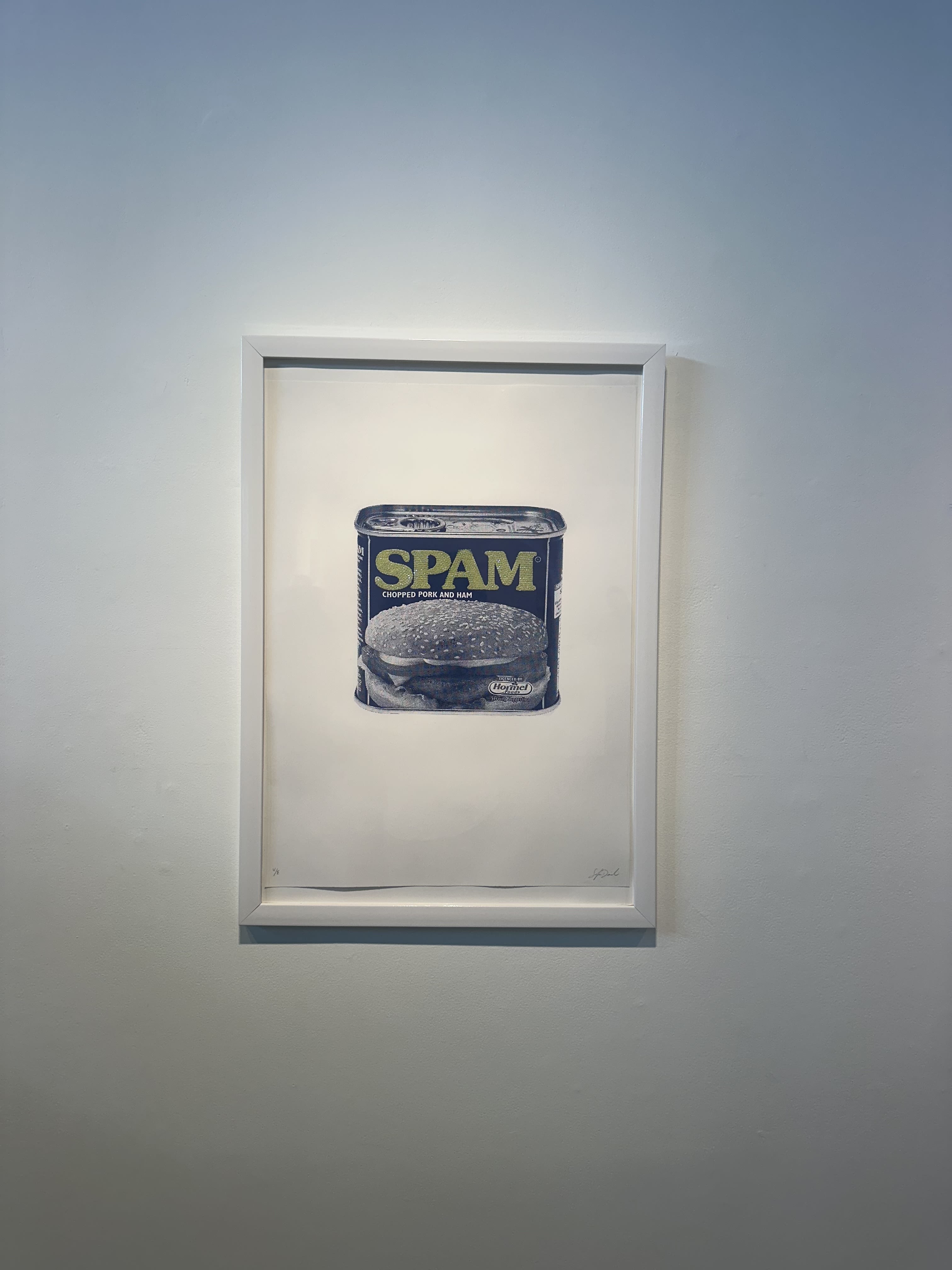

Her art is an extension of who she is – bright, playful, unable to be ignored. Pops of color that refuse to be looked over, much like the girl who created them. Prints are strewn across the table in the studio: a neon bag of Fritos, a bedazzled spam container, and one of my personal favorites, the bright red ketchup bottle.
Sofia David’s “Dear God, thank you for this day, and please bless this food, In Jesus’ name I pray, Amen” is the culmination of her senior project as an art major at Point Loma Nazarene University. She’s been creating for years now, and this show is a chance to put it all out into the world. The collection mainly features screenprints, a set of iconography playing homage to the legends like Andy Warhol. But Andy Warhol didn’t have a sparkly container of spam.
Print, bedazzle, repeat
David’s art collection is an homage to her childhood foods. Fig newtons, saltine crackers, spam, juicy fruit gum and other childhood snacks line the studio. Using screen printing, David blew up images of these foods into larger-than-life prints, employing a colorful pop-art style throughout the collection. Neon colors jump off the page, and if that doesn’t catch the attention of someone walking past the gallery, the sparkles will.
“I just kept thinking, what can I do to elevate these images? I was thinking back to childhood, and that's when I got the idea to add sparkles and bedazzle it.”
Each image has a glittery, disco-ball like appearance; through this artistic choice David has managed to make bologna appear to be full of glitz and glam.
“The food’s kind of white trashy, some people might say,” David admitted unapologetically. “Really for me it's nostalgic of the early 2000s. Some of these I wouldn't really reach to eat now, like I hate fig newtons and I don’t ever really eat raisins, but those are snacks I would eat all the time as a kid. We would take them to the beach or to the park, and that’s what I’m thinking of when I look at these prints.”
David said she wanted her work to explore the idea of nostalgia, especially as she is nearing a big transition out of childhood. College graduation looms ominously around the corner, which for many graduating seniors is a vast pool of “what now’s?” David says preparing for the transition has caused her to think back to some of her favorite times as a kid.
“The project’s all about this yearning, for a time that was, and also this last goodbye to childhood that’s happening since I am about to graduate,” David said. “I’ve been thinking and reflecting on that a lot.”
But David didn’t want her work to feel too heavy, despite the melancholy she might feel while looking through old picture albums. If anything, her art is a stark contrast to the looming dread felt by 22-year-olds across campus. Despite how she might feel, David is choosing to celebrate these memories. In her mind, the fun images are a way to push back on some of the sadness that she feels when thinking about her childhood, and her art can transform that sadness into a celebration.
Andy Warhol’s work
The iconography David chose to use was, in many ways, inspired directly by Andy Warhol. In particular, David referenced his soup cans as a place of inspiration for her, since her collection is also about food.
Like the tension between sparkle and sadness in David’s work, Warhol’s prints were also a place where conflicting ideas could coexist. Housed in the Museum of Modern Art (MoMA), Andy Warhol’s 1962 Campbell’s Soup Cans explore the senions of celebrating and questioning consumerism, according to an article by Julien Delagrange in Contemporary Art Issue Magazine.
“Campbell’s Soup was a part of Warhol’s diet for years, claiming he had the same lunch drinking Campbell’s Soup every day for 20 years,” Delagrange said. “One could not help but notice the repetitive nature of this series, in which not only the viewer but also the consumer is being bombarded by the same image over and over again.”
Like David, food was personal for Warhol – so personal that it ended up being one of his most famous pieces of art. His modern pop art style became an inspiration for many up-coming-artists, as well as students like David.
What exactly is screen printing?
David’s installation wasn’t just about creating the images – she had to get these images into the correct medium of art. Screen printing, a popular style of modern art that involves a process in which ink is transferred to a textile or canvas using a stencil, was originally a bridge between art and industry.
According to the Saint Louis Art Museum, screen printing “first rose to prominence in the US in the 1930s. At the time, the technique was favored for producing the highway marking system, small- and large-scale advertising signage, and spare-tire covers.”
Because it was a cheap and flexible alternative to other printing methods, screen printing was a favorable technique for the graphics industry during the Great Depression and post war eras in the United States.
According to the museum website, “While WWII contributed to a decline in the advertising industry, it also generated an increase in government work, such as propaganda posters, maps, banners, Civil Defense armbands, dials for electronics, and more. The production of these materials accelerated the development of the medium.”
Then, after the war ended, the art field adopted screen printing. Advancements were then made as artist experiments with different fabrics, like nylon screens, as well as photographic and knife-cut stencils.
“Creative freedom coupled with rapidly changing fashions of post-Depression America encouraged artists and designers to experiment, realizing patterned fabrics with an incredible depth of color, texture, and precision,” according to the museum website.
It was then that screenprinting became more than an advertising style. In the hands of artists, this method became a new way to interrogate modern ideas and cultural values.
How to screenprint, a lesson for beginners.
To create her prints, David must carefully follow a series of steps. Here’s a breakdown:
- 1. Design and Stencil Creation:
Create the desired design, either digitally or by hand. For a stencil, the artist can use stencil paper and an Exacto knife to cut out the design. Some artists use a computer-cut stencil or a photo emulsion process. - 2. Screen Preparation:
The mesh screen is then coated with a thin layer of photo emulsion. Then, the emulsion is left to dry in a dark space – direct sunlight must be avoided. - 3. Exposing the Screen:
The stencil is then placed backward on the screen and the emulsion is exposed to light through the stencil. This process hardens the emulsion in the areas exposed to light, forming the stencil. - 4. Washing Out the Stencil:
Then the unexposed emulsion must be washed out to reveal the stencil. - 5. Substrate Preparation:
The substrate, which could be a fabric or piece of paper, must be flat and wrinkle-free. Some artists pre-wash fabrics if they are screen printing onto clothes to prevent shrinkage and improve ink adhesion. - 6. Printing:
The ink is applied to the screen and pushed through the stencil onto the substrate. - 7. Curing (if necessary):
If using heat-activated links, it may be necessary for the artist to heat-cure the print in order to set the ink.
This method is a favorite of David’s. It’s a very trial-and-error process. Sometimes, David checks the canvas and the image just hasn’t come through how she wanted it to. But that’s half the fun of the studio, trying something over and over to make sure it is just right.
A project full of memories
Accompanying the screenprints, David’s installation also includes a resin sculpture of four dinner plates. Pork chops, corn on the cob and roasted potatoes – all cooked by David herself – remain frozen in time under layers of resin carefully poured over the course of one week.
“This plate would my dad’s, because it’s the biggest,” David said while gesturing to one of the four table settings. “And the littlest one would be my younger sister’s.”
The meal she chose was one her family of four ate often.
“It’s sort of funny, because I would always complain when I asked my dad ‘what's for dinner’ and he said pork chops,” vid said. “He was the one who would cook for us. And I would be so pissed but then I always ended up going for seconds.”
Frozen in time, David said the table settings remind her of some of her favorite memories with her family.
“My parents are divorced, too, so it’s not just about the nostalgia of childhood. It’s also about this thing that I won’t ever really have again – dinner as the four of us.”
Family is deeply interwoven throughout David’s art; the bedazzled junk food reminds her of playing dress up with her sister and donning sparkly costumes.
“Each print is a personal story to me, that I can think about and remember. But I also chose a lot of these foods because they’re so well known, so people can see them and create and remember their own memories. So it’s not just so much about me, but other people can enjoy the aestichs and reflect too.”

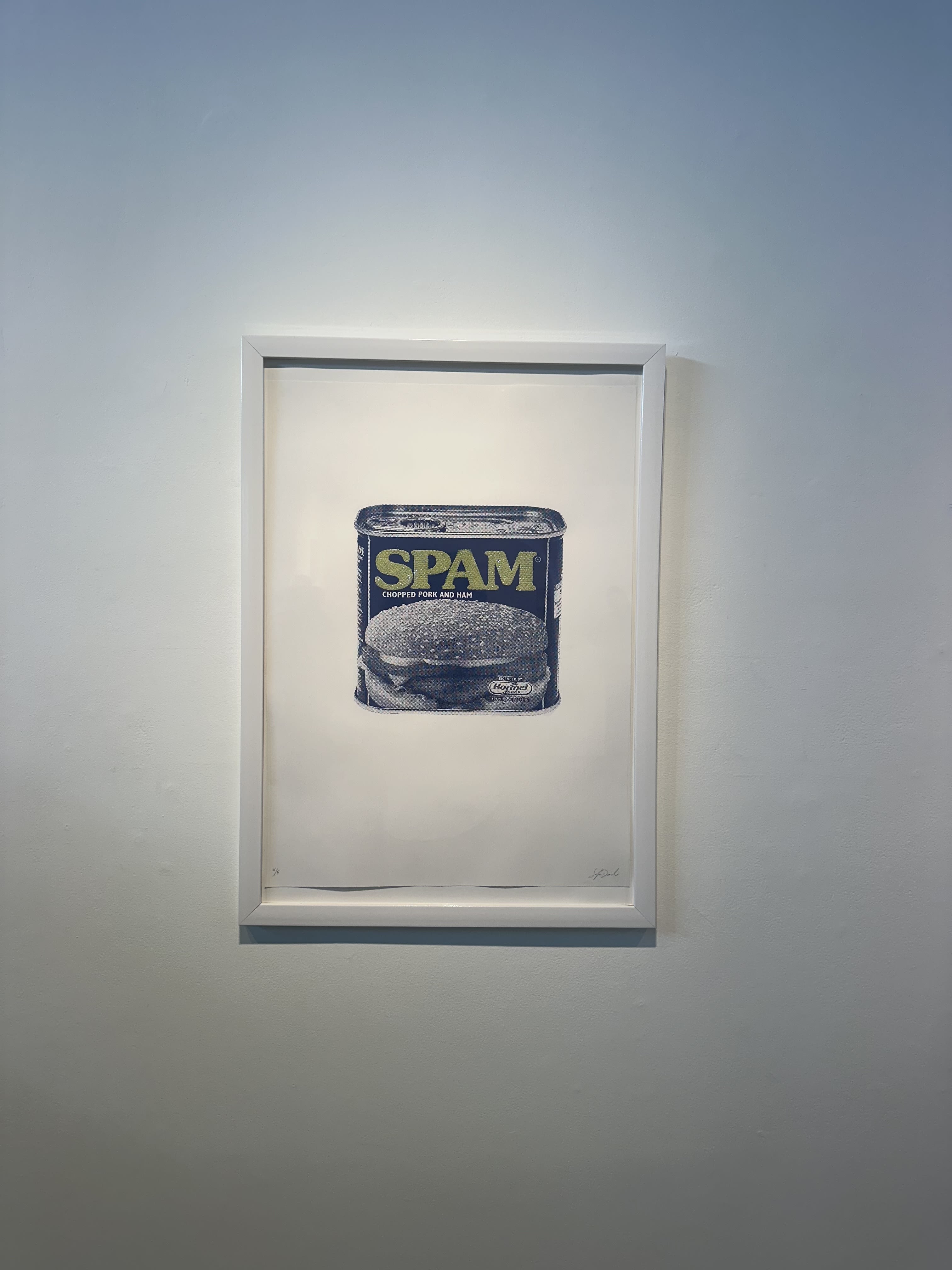
Bedazzled spam container. Photo credit to Kaya Goodwin
Bedazzled spam container. Photo credit to Kaya Goodwin

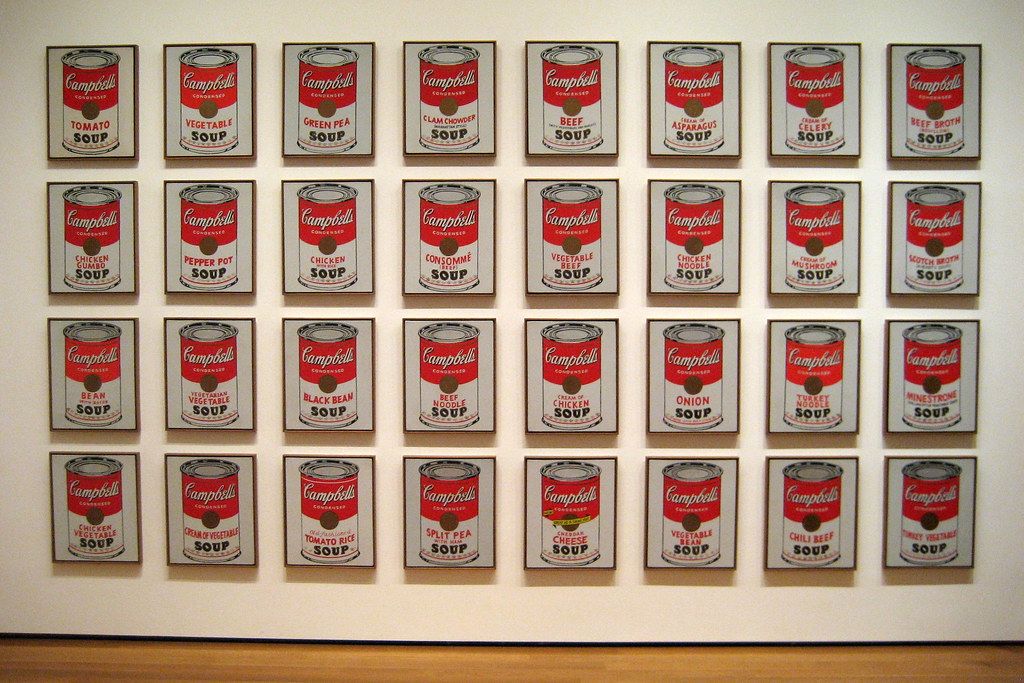
Warhol's soup cans. Photo courtesy of Flickr
Warhol's soup cans. Photo courtesy of Flickr
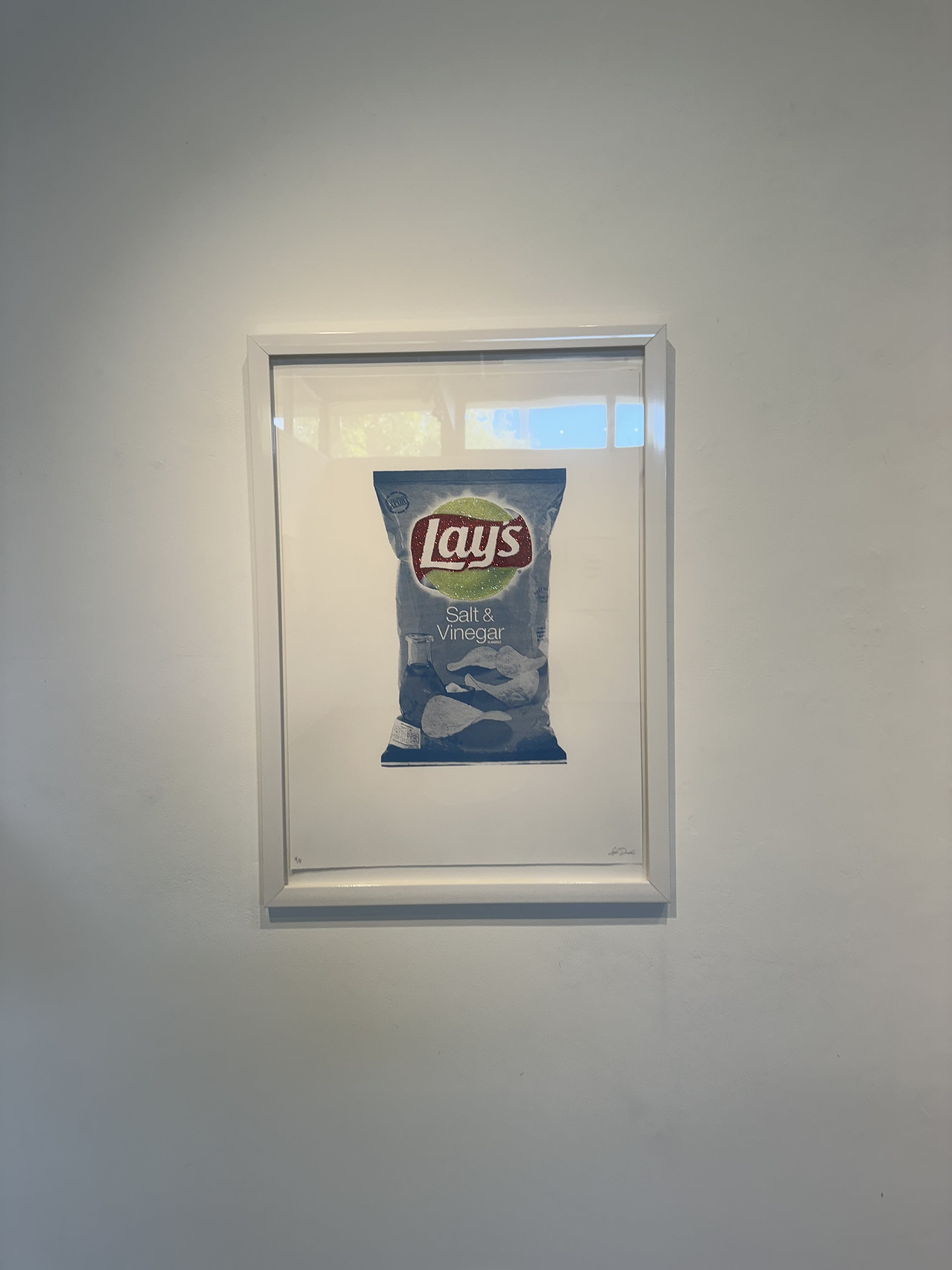
Bedazzled chip bag. Photo credit to Kaya Goodwin
Bedazzled chip bag. Photo credit to Kaya Goodwin
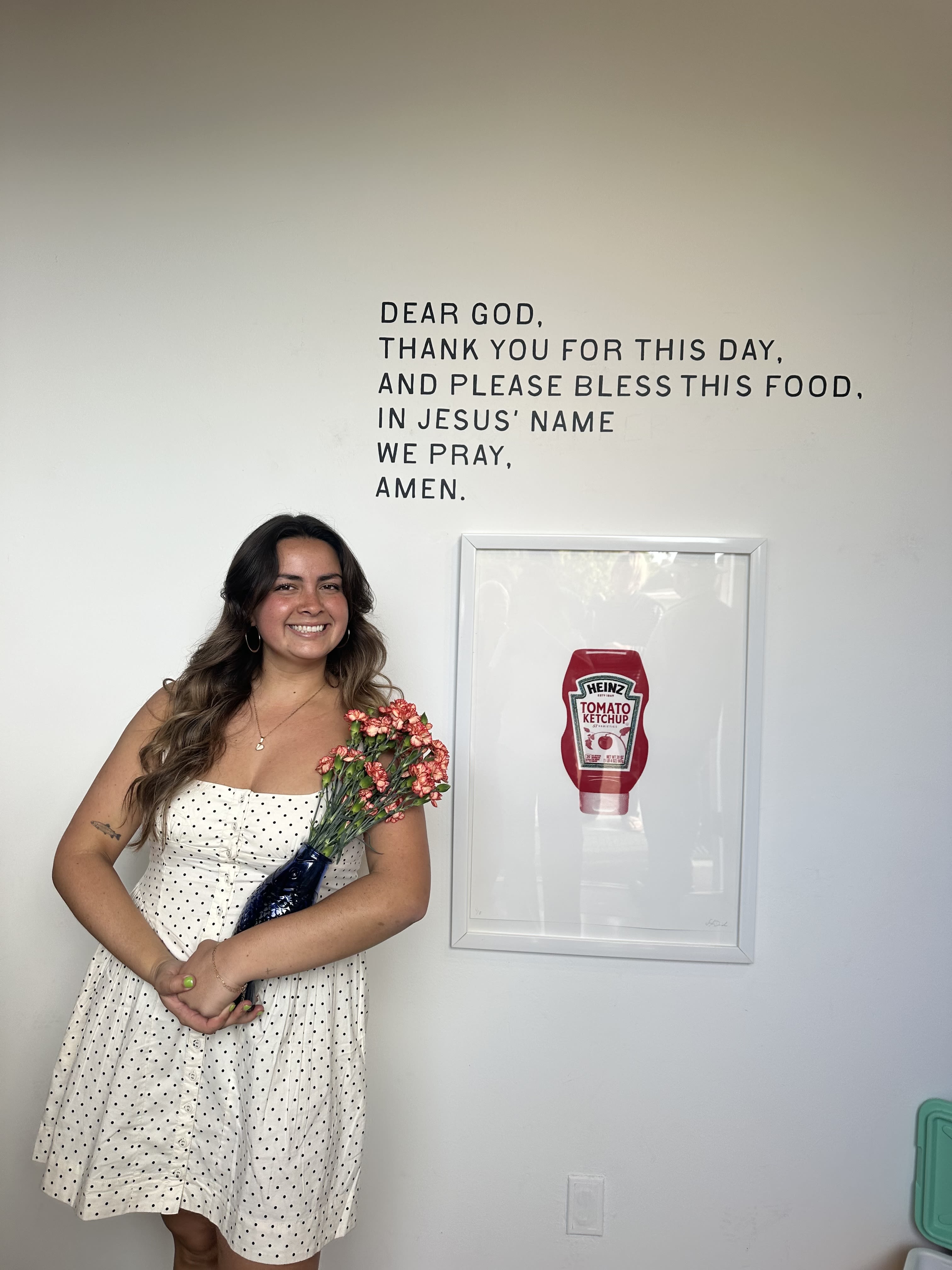
David with the Ketchup bottle print. Photo credit to Kaya Goodwin
David with the Ketchup bottle print. Photo credit to Kaya Goodwin
 Built with Shorthand