
A bomb destroyed an island. People were there.
The United States asked to use their land. What happens when you can't return home?
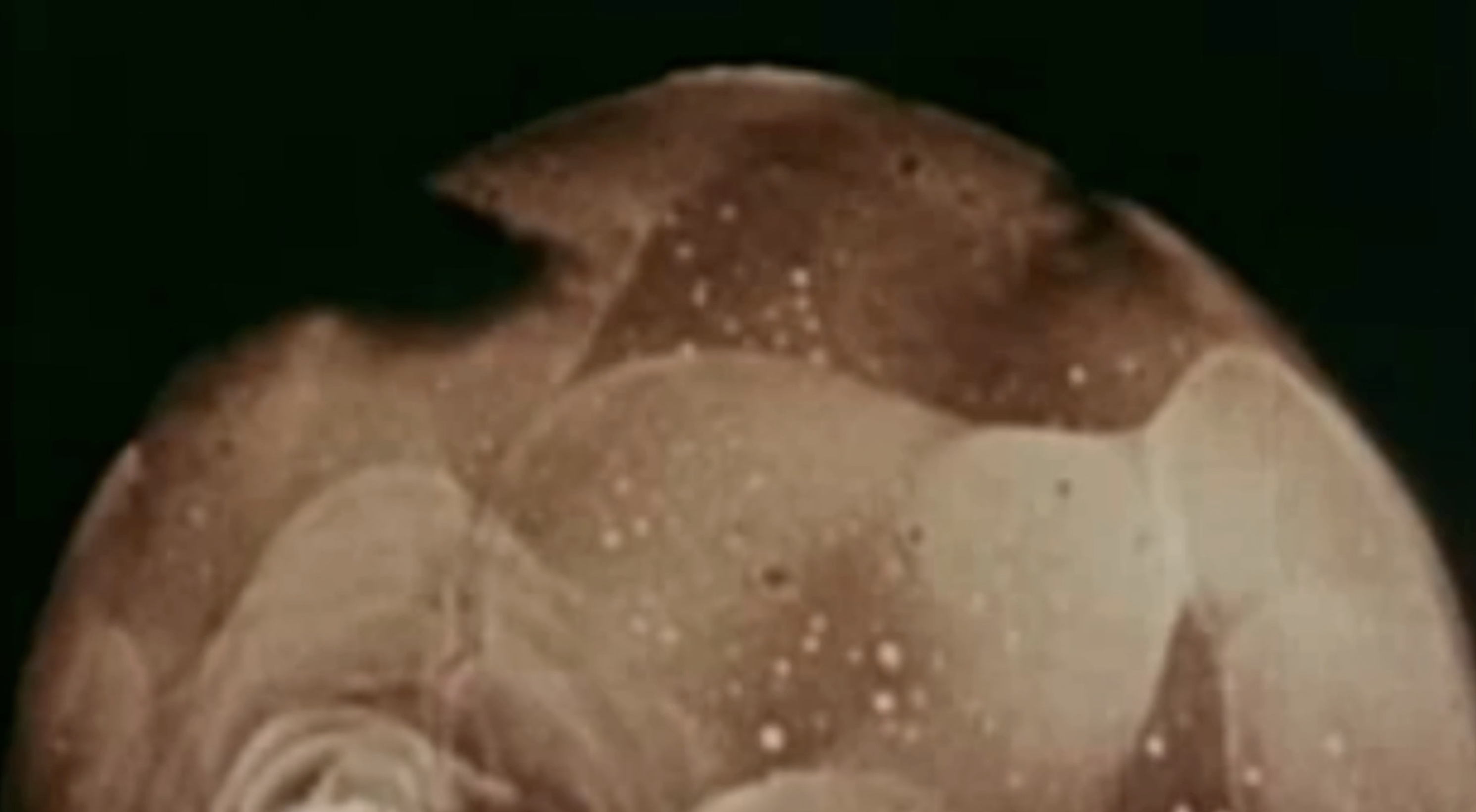

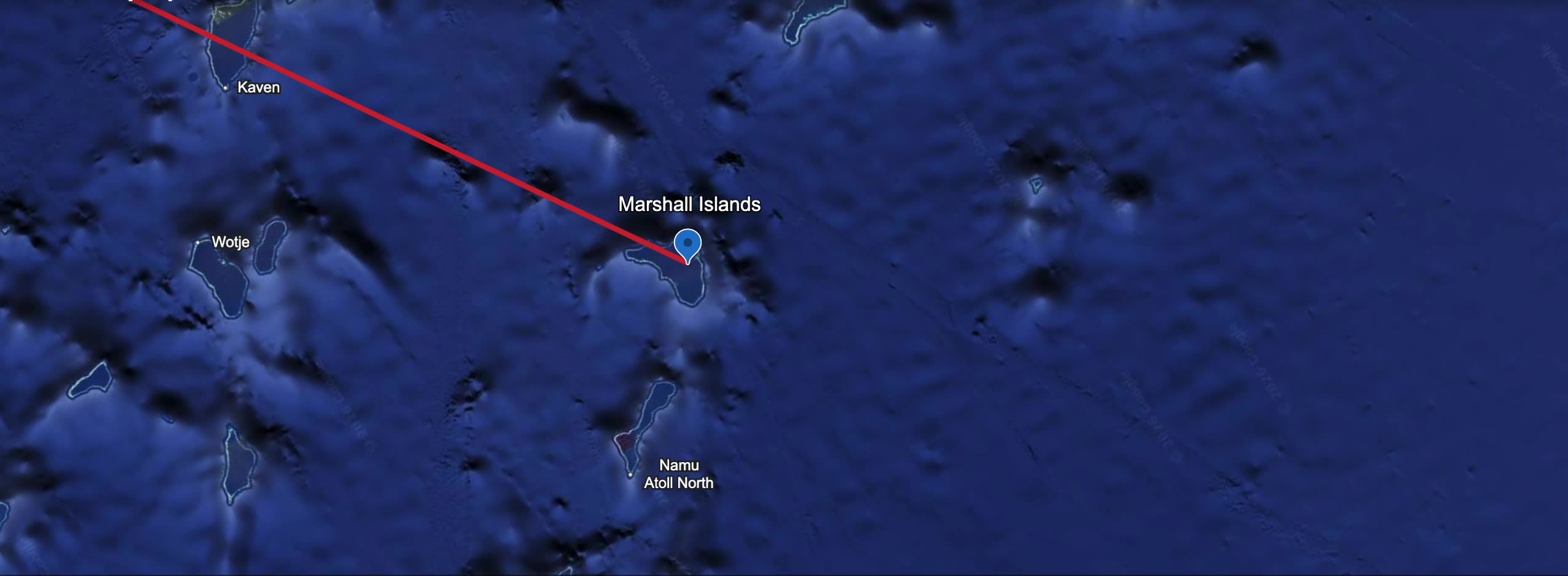
People of Lebanon, Iran, Ukraine and Palestine are being displaced today. Seventy years ago, another group of people were displaced. The Marshall Islands is a speck on the map, located between Hawaii and Australia. It is composed of 29 atolls — small islands — made of coral. Each atoll has several islands.
More than 4,800 miles away, about 300 Marshallese now call San Diego their home, according to a 2025 study. To maintain their culture and preserve their history, they speak their language — Marshallese — gather for church and celebrate traditions.
This story is personal. I am Marshallese.



They are helping me learn the culture and history. I carry this blood, too.
Mama comes from the Republic of the Marshall Islands. Many from our small home in the Central Valley of California assume we are Filipina or Mexican because of our tan skin, short height and dark, thick hair. I wasn't raised with the culture. I don't speak the language. But I wanted to know where she came from.
This inspired my senior capstone project for my degree in multimedia journalism at Point Loma Nazarene University.
Mama is from Ebeye, an island about a mile wide and a mile long. She traveled to the United States alone at 15 years old. She didn't share her culture or childhood with me or my sisters until we showed interest in what being Marshallese meant.
A humid breeze, salty air and warm ocean water welcomed me on my visit to Majuro, the island’s capital, two summers ago. I met family I didn’t know I had, got teased by strangers for having lighter skin and experienced the island’s beauty. I drank from a coconut, tried bōb — a local fruit — and suffered the wrath of island sun.

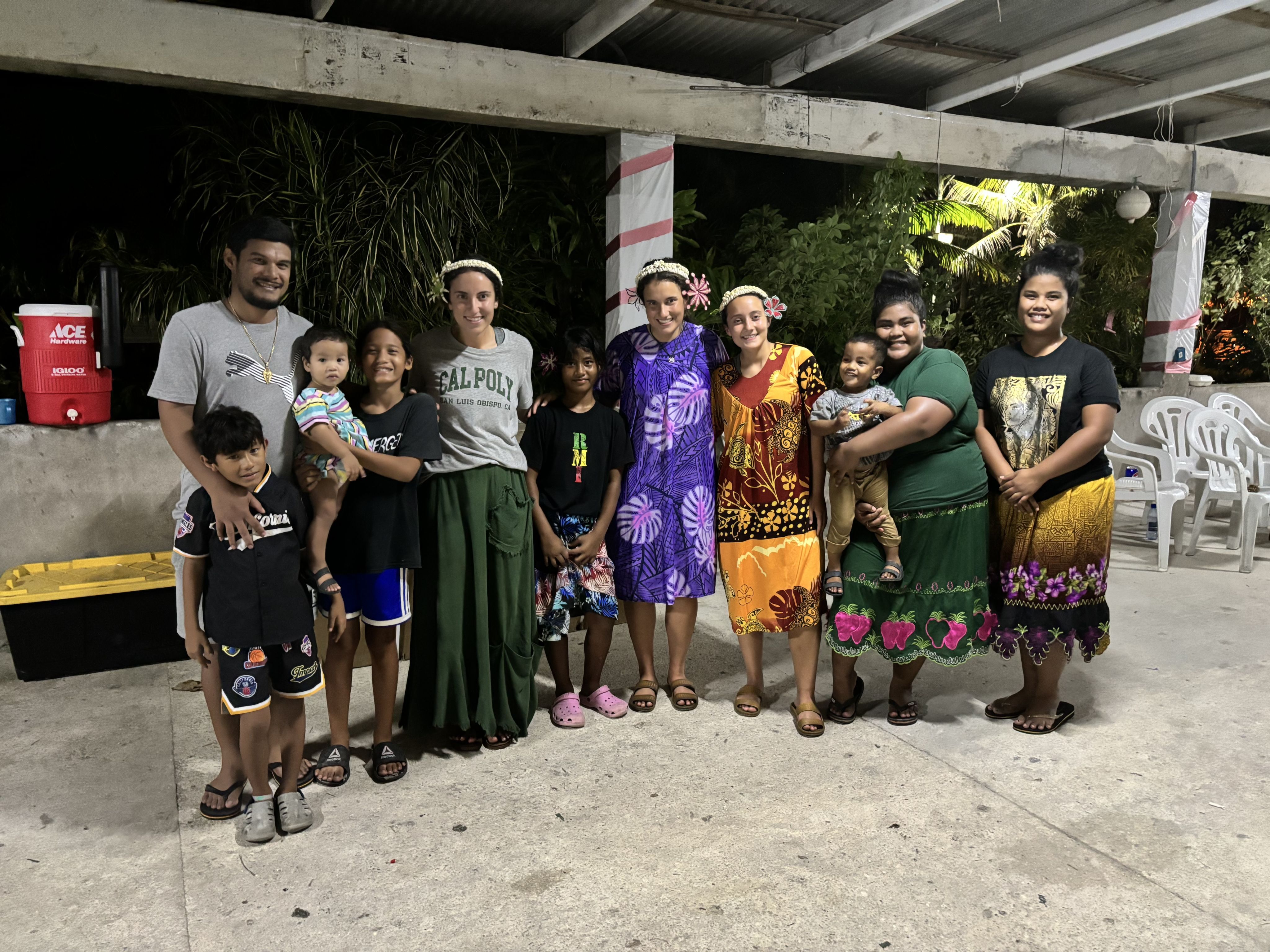
My sisters and I visited the Marshall Islands in June 2024 for the first time. From left: cousins, my sister Sam, cousin, me, my sister Jess and more cousins.
My sisters and I visited the Marshall Islands in June 2024 for the first time. From left: cousins, my sister Sam, cousin, me, my sister Jess and more cousins.
In a room full of my bamle, Marshallese for “family,” the night before we returned to the U.S, my sisters, mom and I sat in front of them as they sang to us. Mama cried.
“I am ashamed I didn’t come sooner so my girls could meet you all,” she said.
“I am ashamed,” she repeated.
I felt inspired to tell the Marshallese’s story. They are helping me learn the culture and history. I carry this blood, too.
More than 70 years ago, the Marshallese were displaced. Like other nations around the world today, the Marshallese of the Bikini Atoll is another group of people who cannot return home. To maintain a sense of home, they remember who they are and where they come from through their traditions and customs throughout the U.S.
About 300 Marshallese are in San Diego.
This four-month-long project is not only about how the Marshallese people in San Diego find their sense of home. It’s also about me discovering a part of myself that I wasn't raised with.
Dry heat, dusty air and no ocean is the place I call home, where I grew up. But now I have another.
More than 4,800 miles into the Pacific, about 21 and-a-half hours by plane, is a small island in between Hawaii and Australia. There are people there. Mama is from there.
A conversation with the granddaughter of Bikini Atoll's king

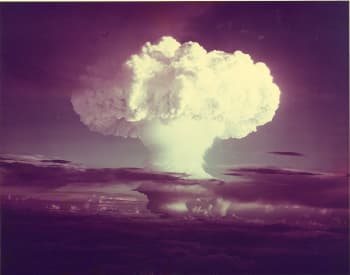
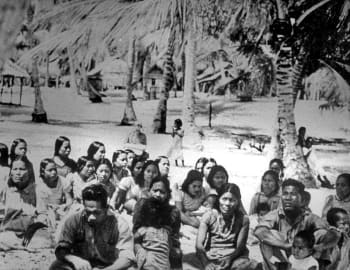
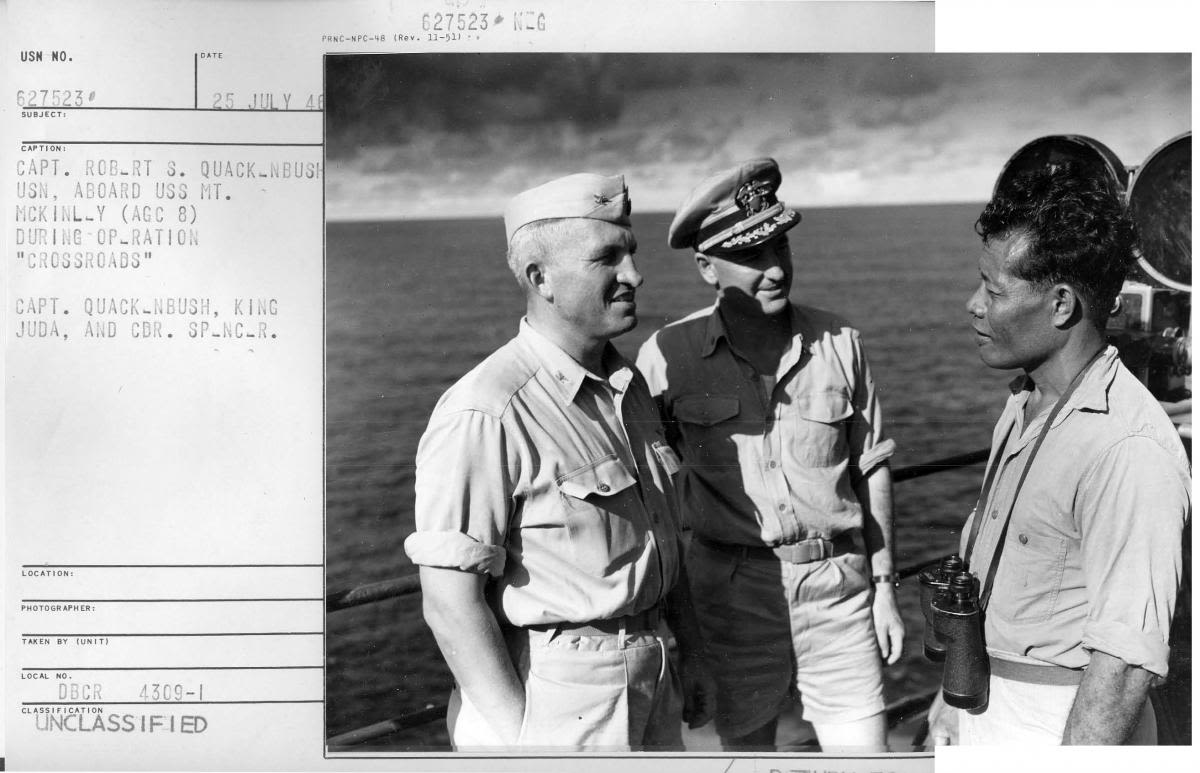
More than 70 years ago, King Juda Kessibuki of the Marshall Islands' Bikini Atoll was asked to take his people and leave their island so it could become a bombing range.
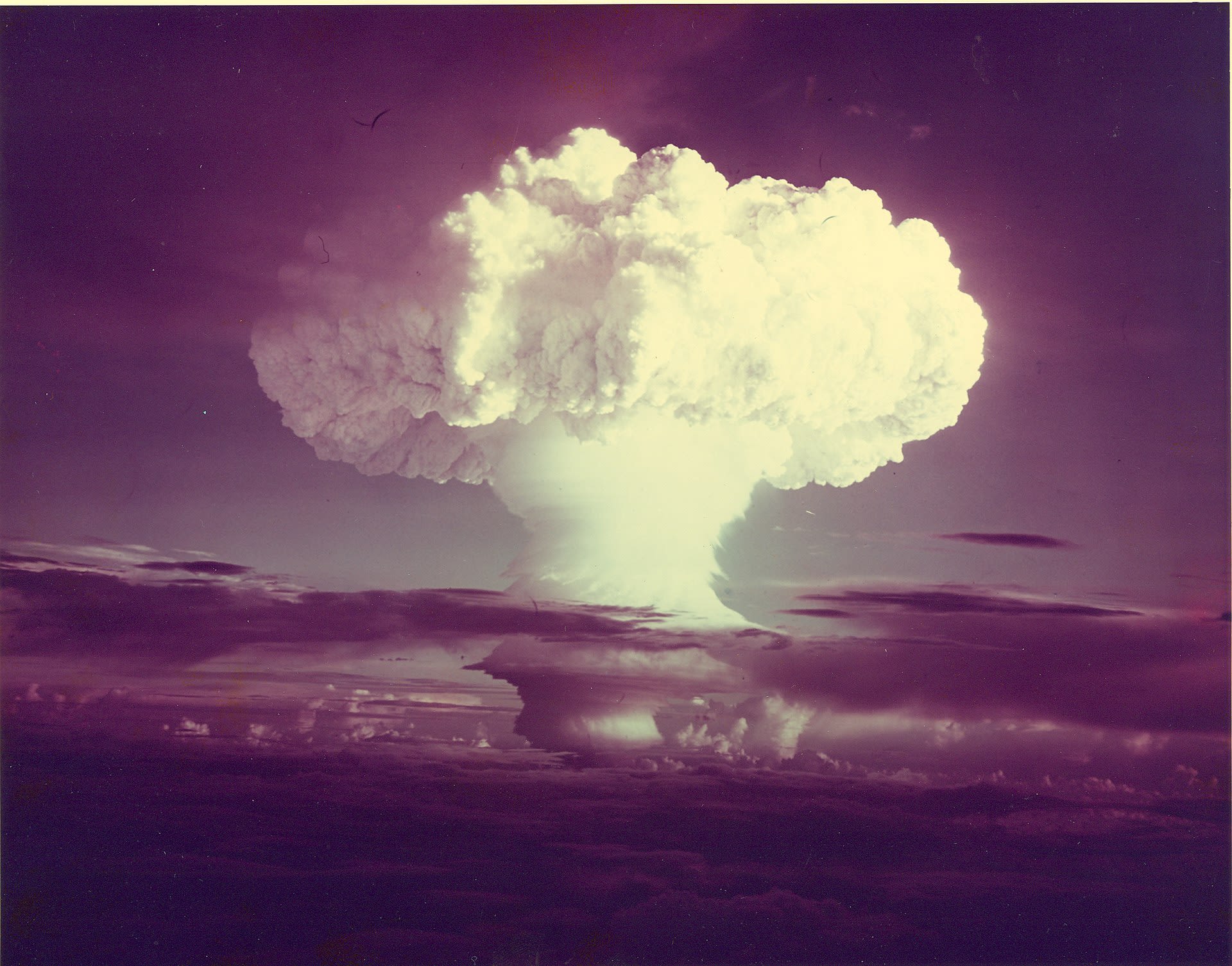
The United States tested 67 atomic bombs on the Marshall Islands from 1946 to 1958 to develop their atomic science and technology during the Cold War. The Bikini Atoll suffered the most, as 23 of the bombs were dropped there, displacing 167 Marshallese people.
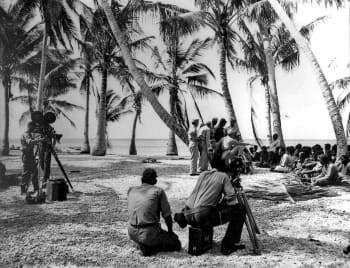
King Juda was asked — really instructed — by Commodore Ben Wyatt, American military governor of the U.S. government to temporarily leave the island while they tested.
They were never able to return. The testing caused severe radiation fallout, so much so that the Bikini Atoll was no longer habitable.
King Juda's granddaughter, Carol Lorennij, now lives in San Diego.
Lorennij and her daughter, Tia, are examples of the ways the radiation effects still impact the islanders 70 years later.
These effects continue to impact generations, especially from the Bikini Atoll lineage, including Lorennij.
She now carries the story of her grandfather and people in San Diego.


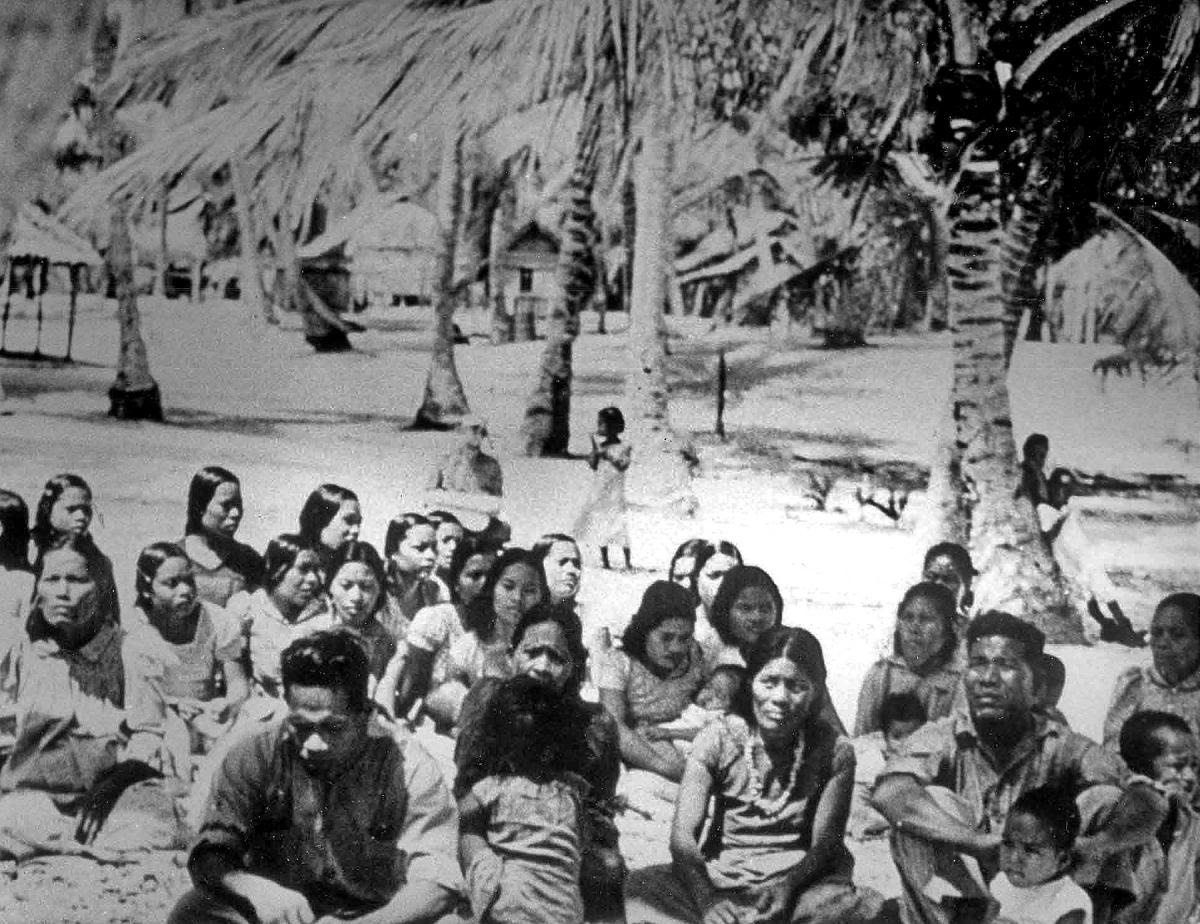

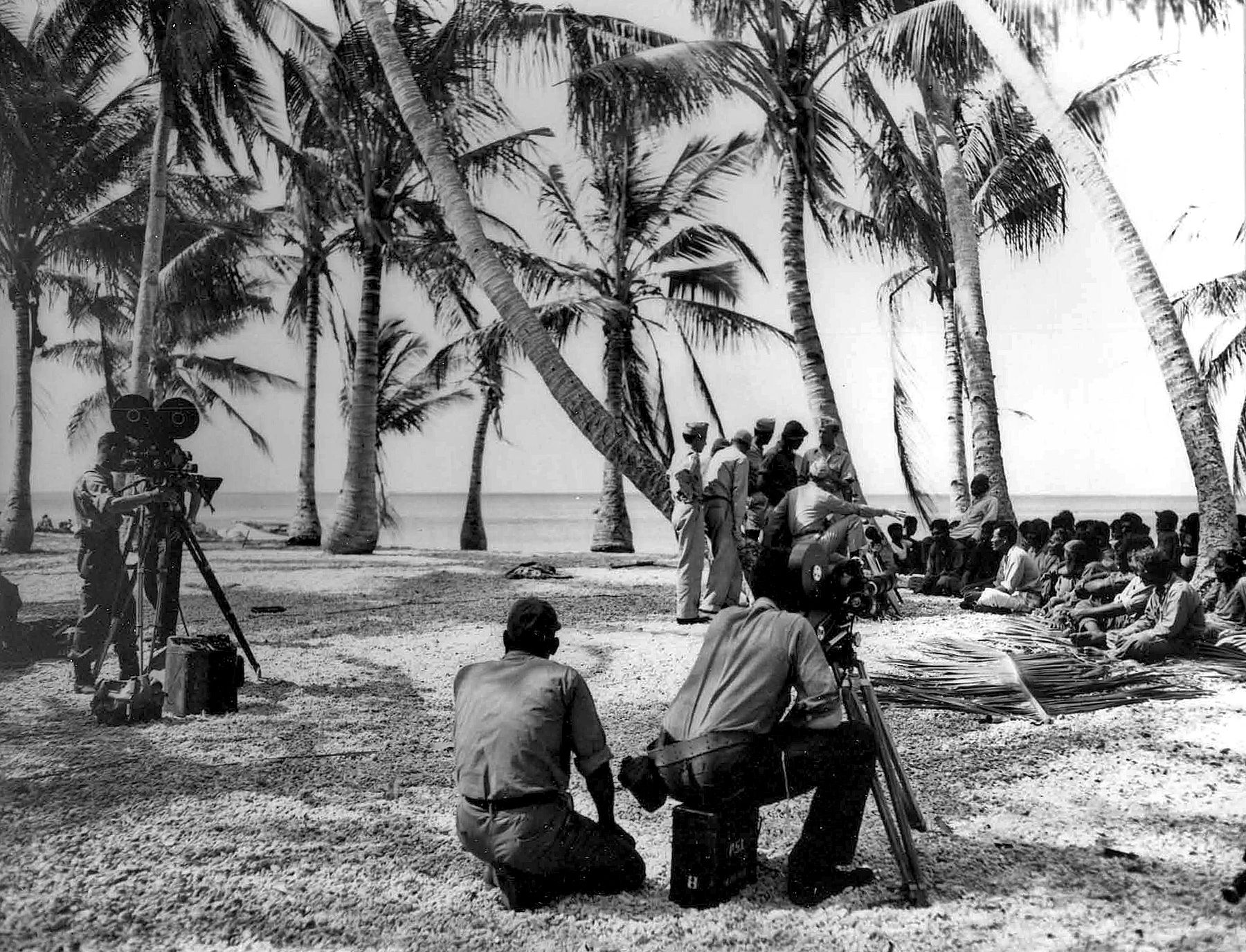
Archival audio courtesy of the U.S. National Archive.

The Marshallese were forced to island hop multiple times due to the radiation exposure. Data platforms I explored did not pinpoint the smaller islands they moved to.
I could've coded to make this digital, but that wouldn't have served the right purpose for this story — that the Marshall Islands is underrepresented.
In 1946, the U.S. government asked the Bikinians if they could test on their island for the well-being of mankind. They soon realized the radiation had severe effects, forcing the islanders to leave their home.
The 167 Bikinians moved about 148 miles east to an unpopulated atoll with a lack of food and water. It wasn't far enough.
In 1948, they moved about 143 miles to "Kwaj" due to poor living conditions. The total land area is just over six square miles.
Several months later, because of the radiation spread, they were moved 260 miles to a much smaller island that lacked a protected lagoon. This changed their lifestyle, such as how they fished.
The radiation left severe effects on other islands as well, permanently displacing the Marshallese.
From 1947 to the 1950s, residents of Enewetak evacuated to make room for more testing.
Over 140 miles away, the islanders moved due to 43 atomic tests that rendered their home no longer livable.
About 100-160 residents returned to Bikini in the early 1970s after the U.S. declared it safe.
In 1978, studies revealed soil-grown food caused high radiation ingestion, leading to a second, permanent evacuation.
How the Marshallese maintains culture away from home

It was two hours into the party, and the guest of honor rode in on a toddler-sized car navigated by his parents. Moments before, deacons and religious leaders from around the United States made their grand entrances, honored with traditional Marshallese woven head and neck wear.
The party lasted until the early hours of the morning. The star of the event, a 1-year-old, only napped for maybe 20 minutes. Pretty impressive, given my 21-year-old self got caught dozing off more than once.
Kemem, or in English, the celebration of a baby’s first birthday, is a rite of passage in the Marshallese culture. The event can unite hundreds of guests with local food, music, gifts and dancing to reconnect with their home islands.
The history
The severe radiation fallout from the atomic bomb testing resulted in fertility issues for the women, according to the National Library of Medicine. Infants rarely lived to their first birthday. So when one did, they celebrated.
Kemem comes from the term “kemejmej,” meaning “to remember.” Traditionally, the celebration was held for a manje — Marshallese for first born — because it was also a milestone for the family.
It continues today with some evolution. Instead of only hosting a kemem for a manje, it can now be celebrated for any child who reaches one year of age.
I am Marshallese, but I didn’t have a kemem.
My mom, Saze Brammer, moved to the United States when she was 15 years old and lived with an American family. While she said she thought about having one for me, experiencing American culture at an impressionable age changed her perception of the first birthday.
In February, my mom and I were invited to a kemem, which was hosted at a church in Chula Vista. It was considered relatively small, with about 200 in attendance. It depends on the family, but these gatherings can be as large as 500 and as small as 20.
The event is a call for any nearby Marshallese native to stop by, reconnect with friends and family, meet new people and enjoy nostalgic food that brings them back to the island.
On the islands, the kemem looks similar except you’re surrounded by pandanus leaves and palm trees underneath a scorching sun. On the mainland, food, including pork, bōb (Marshallese for pandanus) and fish, is imported for a taste of home.
It begins around dinner time and doesn’t have a scheduled end.
The kemem is more than a celebration
Like many other cultures, traditions and customs are important to the Marshallese, but especially when away from their island. Yolandina Mito, who invited us to the kemem and is married to a San Diego church pastor, said it’s important now more than ever to maintain their way of life so younger generations can carry it on.
My mom, who adapted to the American culture when she moved, didn’t instill these values in me. The more I grow to understand what being Marshallese means, the more I wish I had been raised with the culture.
We didn’t know the family hosting the kemem we went to. This is normal, though, as the tradition often brings in strangers and Marshallese from around and outside of the United States. If you’re Marshallese, you’re invited.

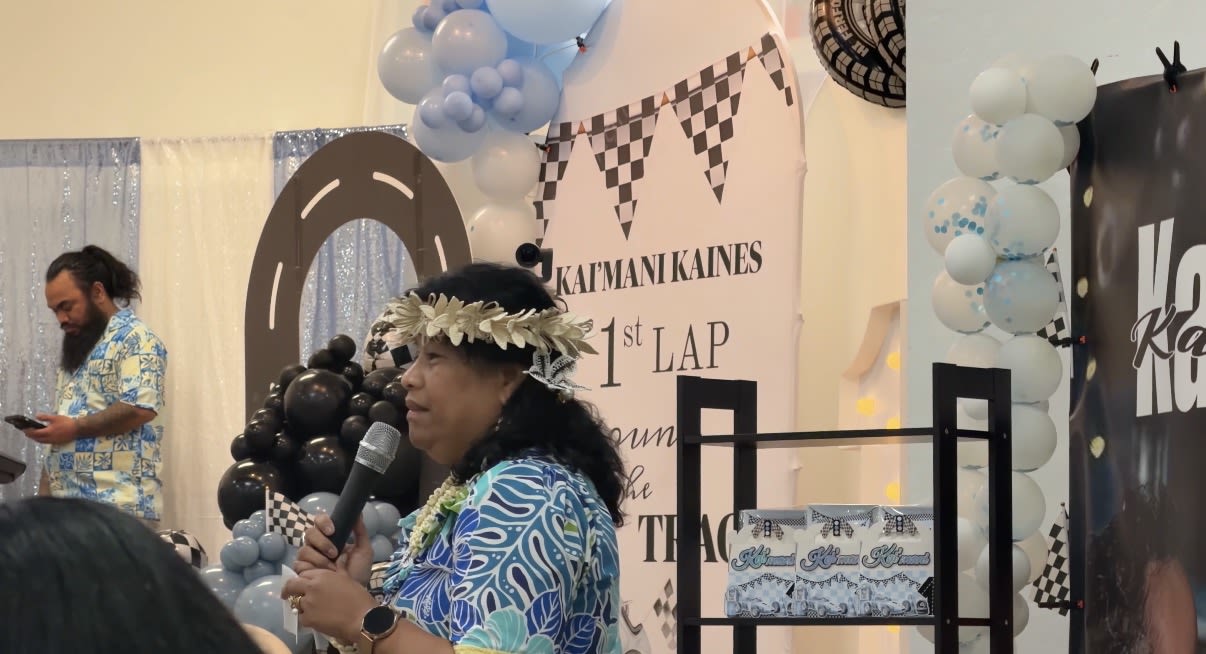
A Marshallese woman opens the kemem on Feb. 28, 2026, in prayer. Photo by Sydney Brammer.
A Marshallese woman opens the kemem on Feb. 28, 2026, in prayer. Photo by Sydney Brammer.

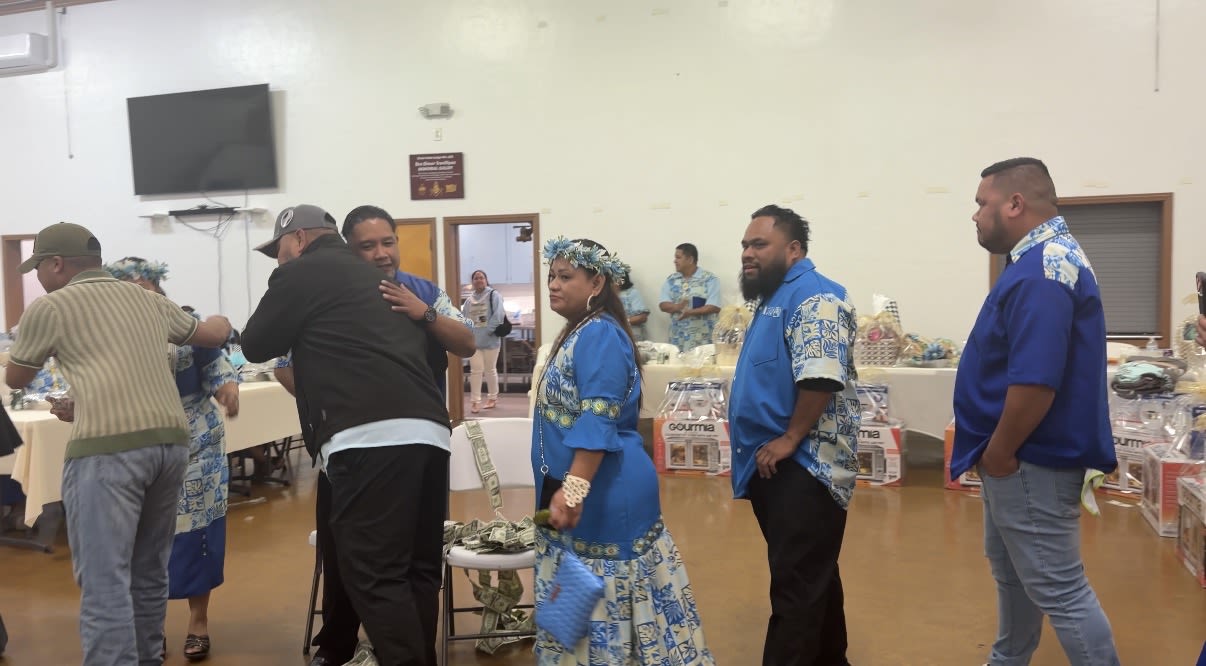
A money walk is a Marshallese blessing where by clan, they line up and drop cash for the family and give a hug or handshake. There were three walks during this kemem. Photo by Sydney Brammer.
A money walk is a Marshallese blessing where by clan, they line up and drop cash for the family and give a hug or handshake. There were three walks during this kemem. Photo by Sydney Brammer.

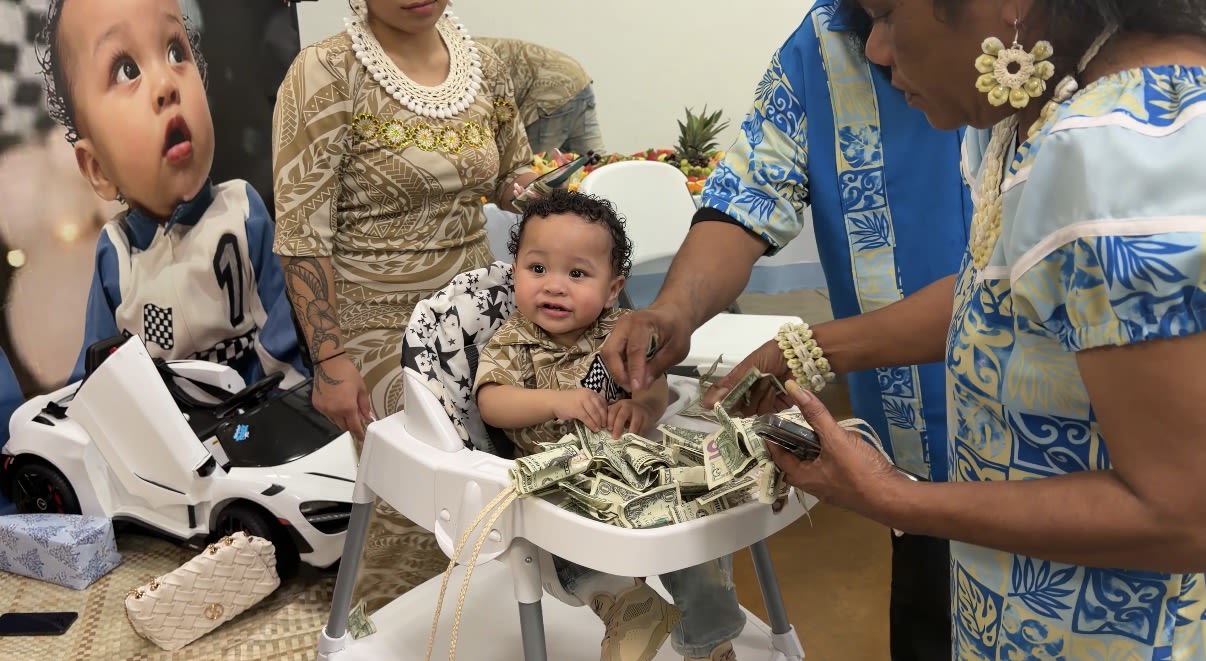
The baby that was celebrated for the kemem with cash from a money walk. Photo by Sydney Brammer.
The baby that was celebrated for the kemem with cash from a money walk. Photo by Sydney Brammer.
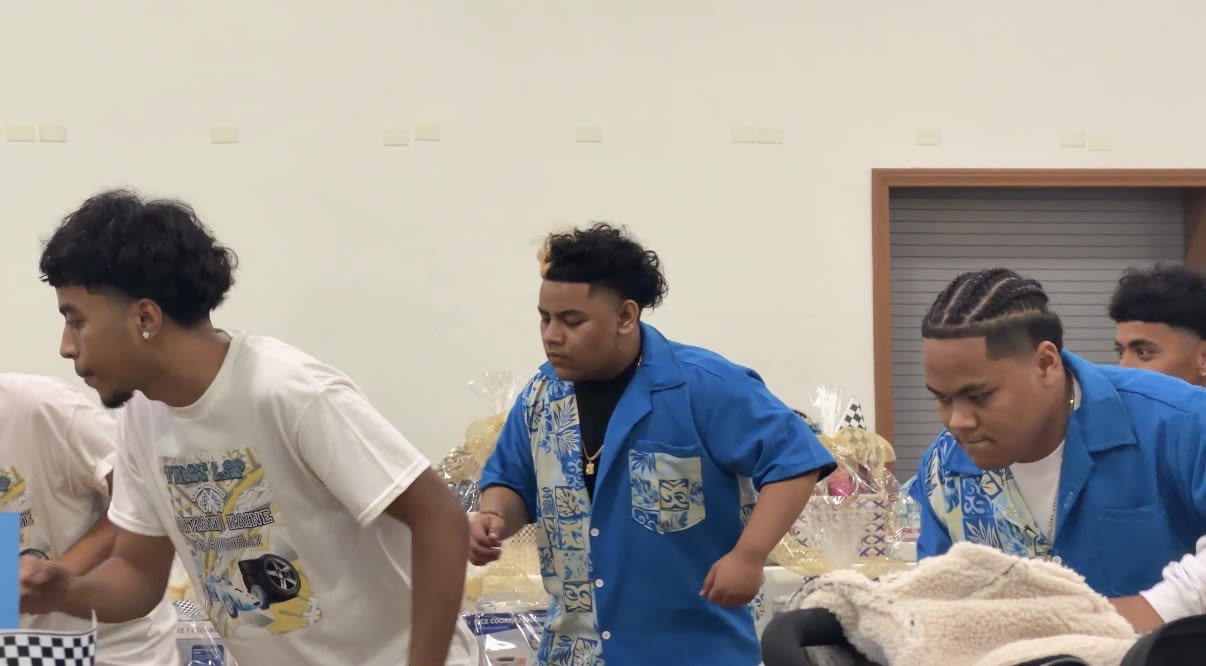
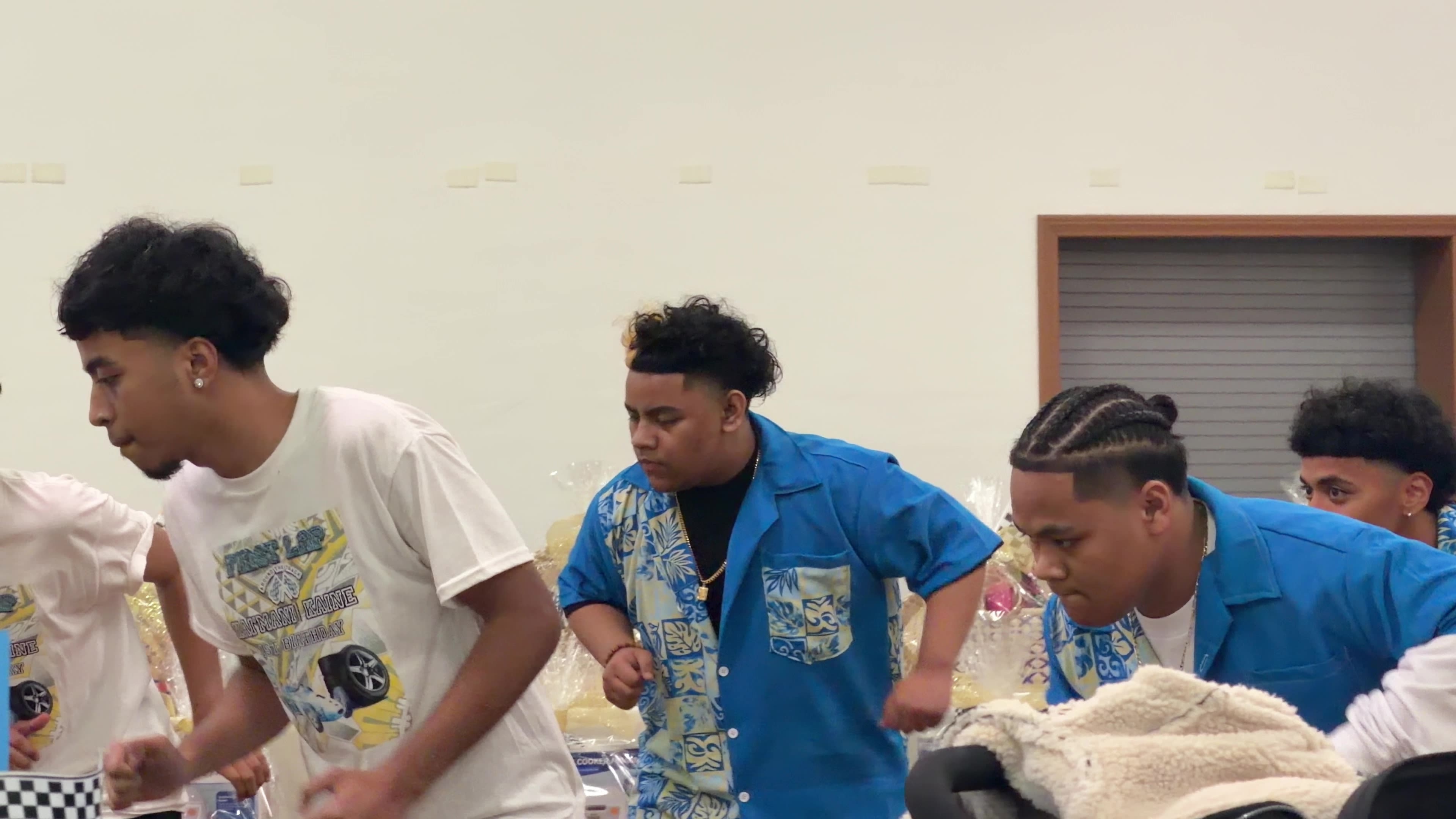
Dance is one of the main traditions in Marshallese culture, often depicting their voyages. Photo by Sydney Brammer.
Dance is one of the main traditions in Marshallese culture, often depicting their voyages. Photo by Sydney Brammer.
“It’s family — kemem is a family.”
The event was scheduled to start at 6 p.m., but the birthday boy rolled in shortly after 8 p.m. Guests who arrived “early” waited patiently. The room was quiet except for the sounds of the DJ setting up their equipment.
Church leaders from around the nation were seated near the top of the room to place blessings on the baby and family.
“[Kemem is] a calling to bless the baby for health and prosperity,” my mom said. “It’s meaningful to them to bring the community together.”
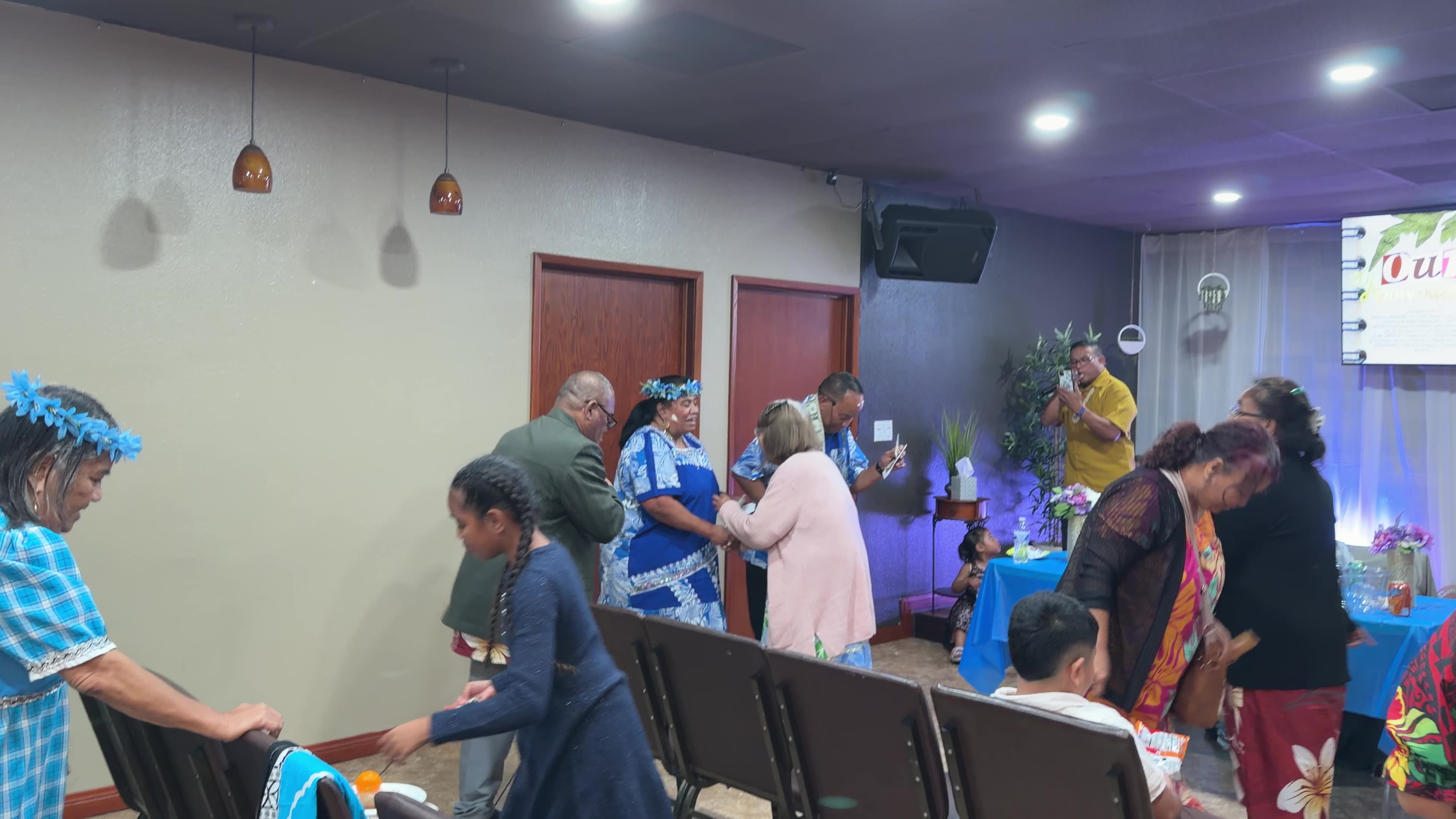
There were three “money walks” during the six-hour event. This is when, by clan, groups stand in a line to drop cash near the baby and family as a way to bless them. This is exchanged with a gentle handshake, which is more like a brief hand squeeze rather than one you’d give at a job interview.
In recognizing the infants who didn’t live to their first birthday, the Marshallese continue to honor the deeper meaning of the kemem.
“We celebrate in remembrance for all the other babies who didn’t make it to their first year in life.”
The Marshallese are religious people, believing strongly in the presence of church leaders and their blessings. The night was strung together with traditional dancing, which often tells the story of how the islanders found their way to the Marshall Islands. The group of boys’ movements depicted rowing a canoe to represent their voyages.
It was a still crowd — everyone sat and watched — with some “chee-hoos” coming from the back of the room, as the boys danced for hours. Or maybe it seemed like a quiet crowd because I couldn’t hear anything but the music — not even my mom, who was sitting next to me.
“Wa” is the Marshallese word for boat or canoe.
“Marshallese people are very modest people, but dancing and singing — their party spirit comes out. A lot of the songs were about their voyages.”
Somewhere in between the dancing and singing, each guest was served food, including some imported from the islands. It came in a large platter, the kind that’s often used for storing food. I thought the one was for my mom and me to share, until the servers came with another one.
“That’s for you,” my mom said. It felt like Christmas.
The platter included a fish head, rice, noodles, bread, bōb and poke, as well as desserts like ube cake.
Community and sticking with their bamle — Marshallese for family — is a deep root for the Marshall Islanders. Many return to their islands from time to time, but those who choose to live on the mainland carry these roots through traditions like this one.
A Marshallese church tucked in San Diego connected me to my roots

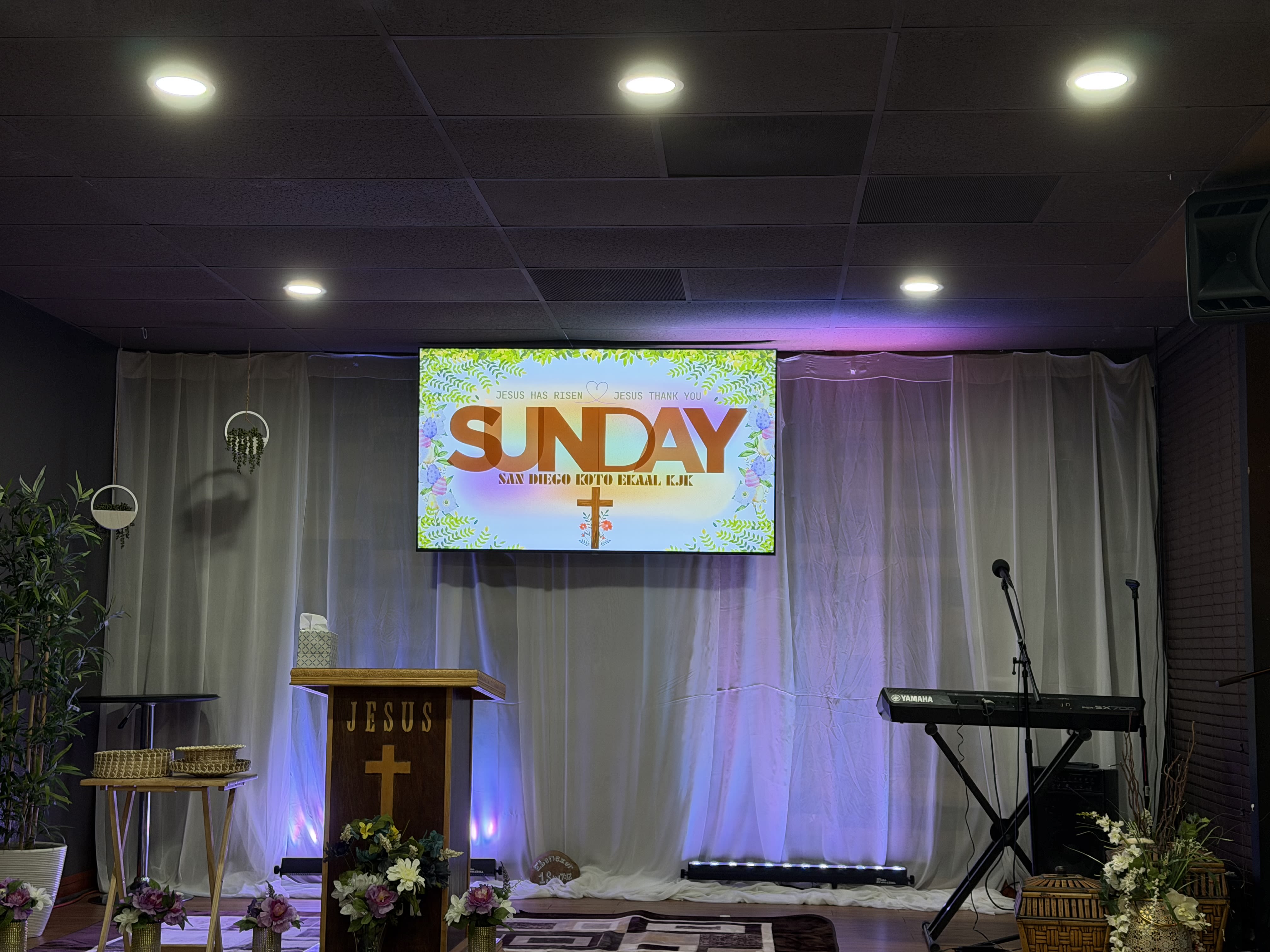
Time somehow doesn’t exist within the small room in San Ysidro, Calif.
It’s tucked into a strip of what looks like vacant buildings, maybe because it’s later in the evening. There aren’t any signs on the church building, except for one adjacent to it, which is another church. Unlike what one might typically expect from a church building, this isn’t a large infrastructure, but a room.
Just under 20 minutes from the United States-Mexico border, a small group of islanders meet to spend time with God and community. They share the space with a Mexican church, so the glass by the door reads “Iglesia Cristiana Getsemani.”
They are Marshallese, a people from the Marshall Islands — known by many Americans for the atomic bomb testing by the United States from 1946 to 1958.
I share a part of this lineage.
5:30 p.m. My mom and I arrived 30 minutes after the official start time, because we know island time, meaning there isn’t really a start time.
Not well enough. The second time around, I thought I had learned and arrived an hour later. Still wasn’t late enough.
This is one of three Marshallese churches in San Diego. It formed three years ago, after Pastor Houston Mito left the Assembly of God denomination, to start a new church under a Pentecostal denomination called “Kituan Jitub Kojarjar,” shortened to “KJK,” which means “breath of the living Holy Spirit” in Marshallese. According to a study by Pew Research in 2024, 1% of the San Diego metropolitan area identify as Pentecostal.
The Marshall Islands is majority Christian, with Protestant being the most common denomination, practiced by more than half of the population, according to a study by the U.S. Department of State in 2021.
The KJK strongly believes in the power of the Holy Spirit, speaking in tongues and divine healing. There are at least 40 KJK churches in the nation, according to Mito, who said that was the amount at a church conference he attended in Oklahoma in March. It is the only KJK congregation in San Diego.
Dolorina Mito-Jeik and Pastor Peter Lorennij led worship, which lasted for about an hour. The Marshallese congregation are passionate in their singing and dancing, often becoming emotional.
That Sunday evening, my mom and I pulled into the parking lot, where we saw only two cars. We weren’t sure if we were in the right place until we saw familiar Marshallese faces. It was Mito, another pastor, their wives and three children.
The room fit seven rows of five chairs. Where the pastor stood was a patterned rug, a keyboard to his left, plants on either side, a TV behind him and a pulpit that had a cross and the name “Jesus.” A box of tissues rested on it.
6:13 p.m. My mom and I chatted with the pastors, took our seats and waited. More members arrived — one with a watermelon.
Ten minutes later, the service began. In Marshallese culture, it’s tradition to greet one another with a delicate handshake, and a “Iakwe,” a greeting in Marshallese, and share your name if you didn’t know the other person.
Going to church and speaking the language are two of the ways the Marshallese maintain their culture in San Diego. Mito’s wife, Yolandina, said they pass down certain manners to their children as another way to keep the culture.
A major one is modesty. “Nothing over your knee,” she said.
The women at church wore dresses to their ankles, called mumus, with bright colors and patterns. Most of the couples wore traditional matching outfits.
Yolandina noted that there are many cultural differences in San Diego, so maintaining traditional customs can be difficult.
“Our job as a parent, we keep trying to just teach [the kids], you know, remind them our custom,” she said.
6:50 p.m. An hour and 20 minutes in is typically when other church services are ending, but this is when Mito opened the service in prayer. He introduced my mom and me to the church. More people rolled in. More at 7:10, then 7:17 — over two hours past 5 p.m., the official start time. A baby ran around the room.
They spoke in Marshallese. I sat close to my mom as she translated for me. She didn’t teach me the language when I was a child because she didn’t like my accent, she said. Still, I didn’t feel excluded during the service.
“You’re Marshallese, so you’re always welcome,” Pastor Peter Lorennij told me.
7:20 p.m. During worship, we walked around the room and did a second round of shaking hands with the 10 members. They waved their hands, some paced in the area they were in, praising. They danced, some sobbed. “Jesus, kommol,” many said. “Jesus, thank you.”
“The worship makes me feel more strong. I was feeling the Holy Ghost Spirit. … I didn’t feel it on my island, but over here.”
Dolorina Mito-Jeik, Mito’s daughter, led the worship. She didn’t stand on the stage, like most churches have worship leaders do. She was off to the side, out of sight. The pastor remained on stage, praising with his eyes closed and hands in the air.
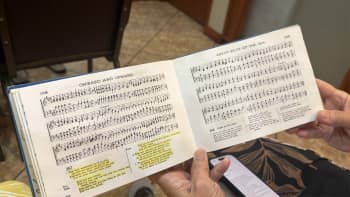

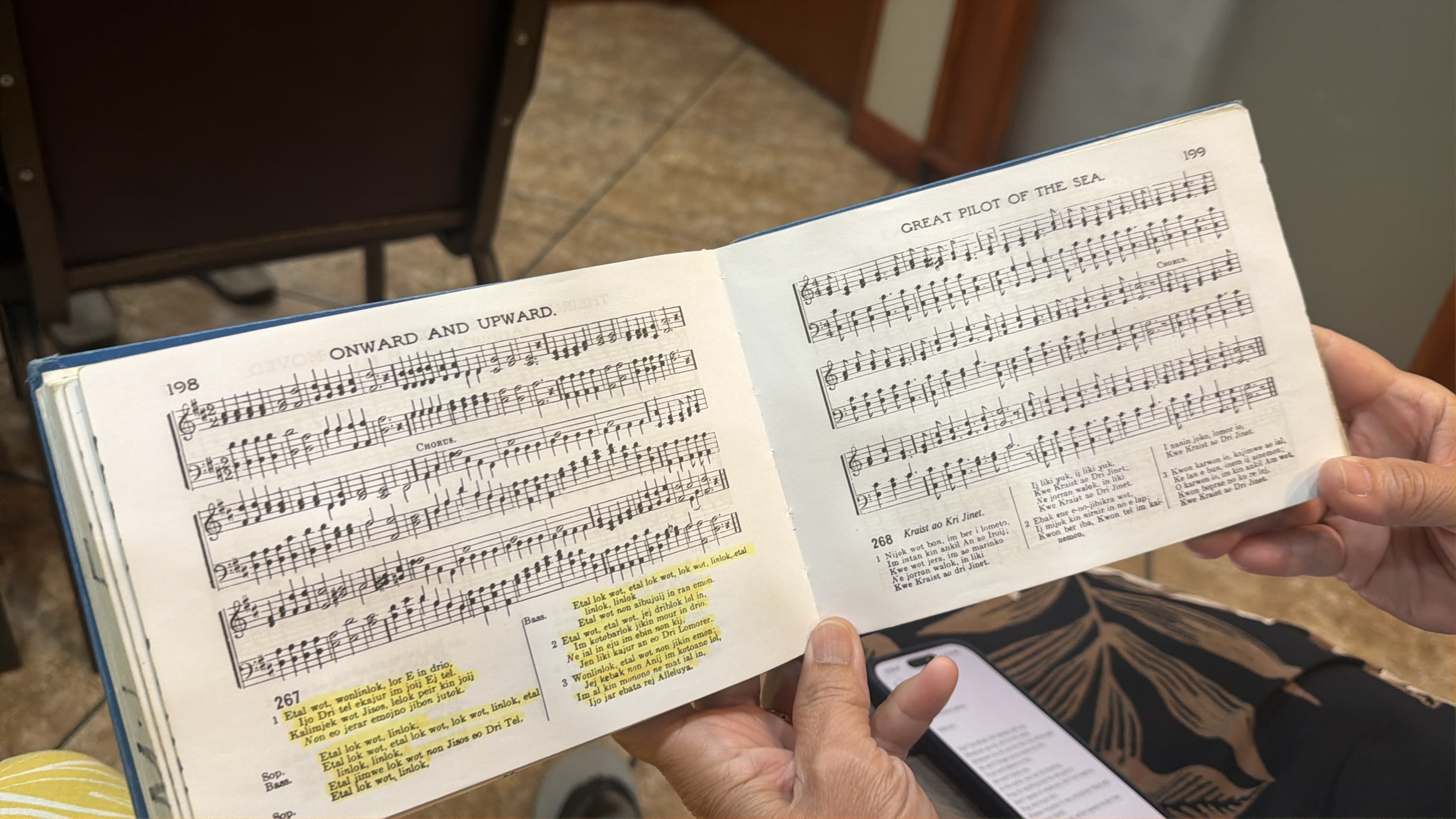


“I know that I didn’t give myself this talent, so I got to give credit to God. One thing that I’m very thankful for in the community, in the Marshallese culture, is we know how to give thanks to God … he’s the reason for everything.”
7:30 p.m. After worship, the church leaders set up a Zoom meeting with an Arizona church, also KJK, for a budget meeting. They were planning their funding for a church conference in Oklahoma, which they attended in March.
A budget meeting isn’t typical for their Sundays.
8:13 p.m. My mom and I were introduced a second time to members who arrived later. Mito asked me to share a part of my story with the church about how I’m on a journey to learn my culture.
I shared with them that I grew up in a small town in central California. While my mom was born and raised in the Marshall Islands, she didn’t teach me the culture. It wasn’t until I attended Marshallese gatherings in a nearby town that I became curious to know more.
8:25 p.m. Mito preached a sermon on trusting God and being fearless in your faith. He was emotional — I soon realized why there was a box of tissues on the pulpit.
“What I like about pastoring the most is you have to study. … So that way, when you preach, you got to make sure people understand what you’re preaching,” he said. “People are united together, come in oneness, you know? One heart, one soul, everybody’s happy.”
9 p.m. The message was followed by more singing. While I did not understand the words, I witnessed their excitement and passion. They danced around the room, waved their hands and cried to Jesus.
“This is what we do,” church member Sylvia Mito told me, as she grabbed my hands and we danced.
“It’s kind of like sanctuary for everyone,” Sylvia said. “The people here are really nice. … Every Sunday we go to church; it feels good. [Her church doesn’t] believe in nothing but God — one God.”
10:30 p.m. I normally would be in bed winding down for the night. But we were getting ready for a party. Members moved a table to the front, and Mito and Yolandina sat down with a cake. They were celebrating their wedding anniversary. We ate pizza, watermelon and other snacks for dinner.
10:47 p.m. We danced and sang for a while more. We exchanged more handshakes and talked.
11:30 p.m. Six hours after we arrived, we left, as a few islanders continued to socialize and dance.
“You just can’t explain that to someone who isn’t Marshallese,” my mom said.

Food holds memories
One way the Marshallese people maintain their culture away from their islands is through food. Growing up, my mom served rice with almost every meal in some way — in a wrap, with chicken or by itself — I'm familiar with it. But a unique dish that's less of a snack and more of a treat is the Marshallese rice ball.
“Rice, as an islander, all across the Micronesia, is a staple. You have it morning, afternoon and night and in between.”
Made with scoops of sugar, coconut milk and coconut flakes, the rice ball is often what you'd bring to a party.
The process of making the rice ball in America looks much different than on the Marshall Islands.
"We did not just have free running water coming out of the faucet," my mom said. "I would go fetch water from the water plant."
There also weren't any premade coconut flakes. My mom said someone would climb a tree or use one that had fallen.
"This definitely takes me back to parties or gatherings at the island," she said.
Amimoņo: Marshallese weaving
Another way Marshallese preserve their culture is representing traditional crafts, art and customs, such as weaving, amimoņo in Marshallese.
The women pass down the knowledge and skill to younger generations to maintain the tradition. They use pandanus (maan) and coconut palm (kimej) leaves and hibiscus fibers (jab).
They craft traditional patterns to create mats, bags and home decor as well as necklaces, flowers and headwear. They often incorporate shells.
I grew up with amimoņo around the house.
Traditionally, these are worn for formal events and gatherings.

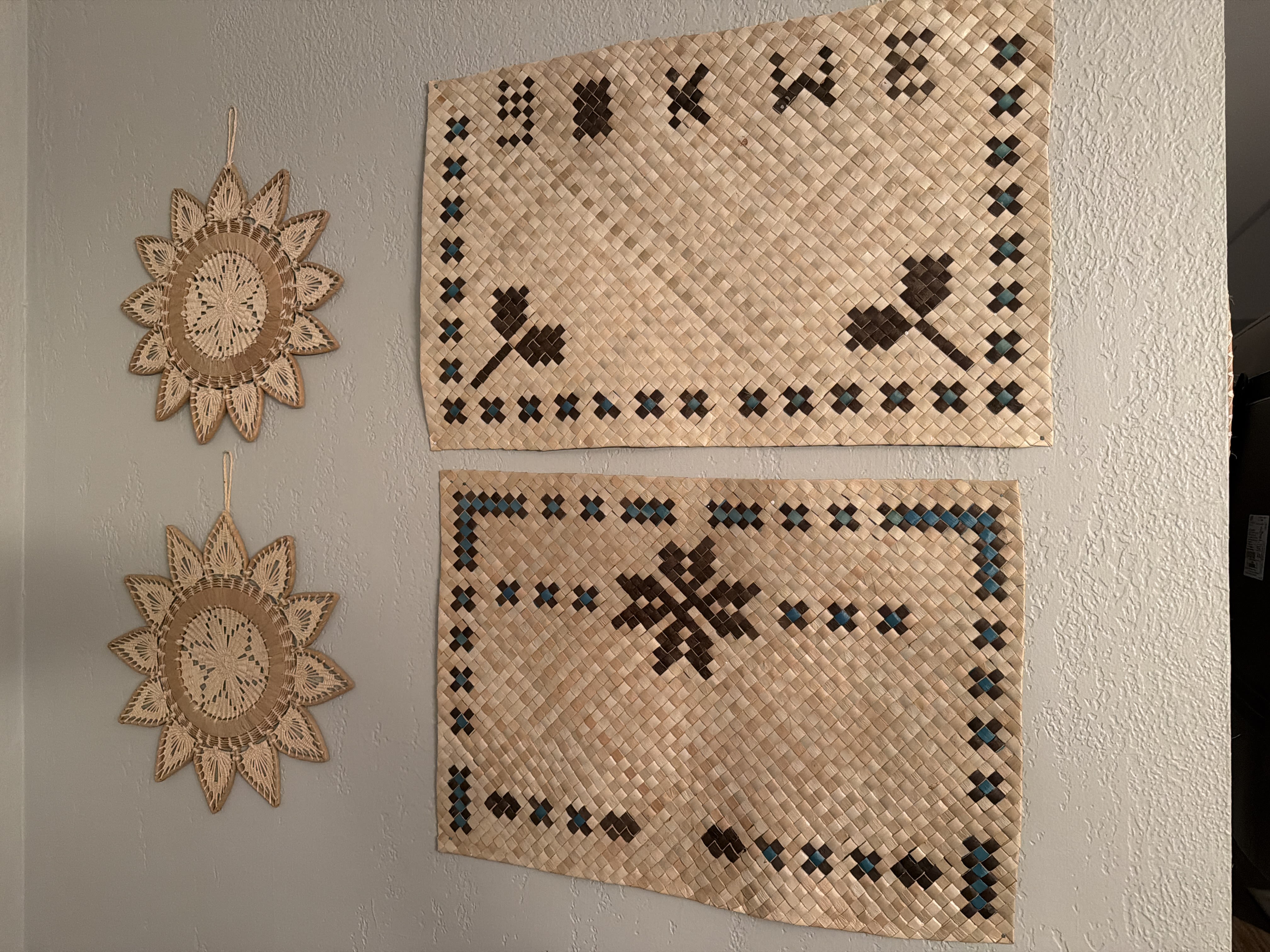
Marshallese woven wall decorations. Photo by Saze Brammer.
Marshallese woven wall decorations. Photo by Saze Brammer.

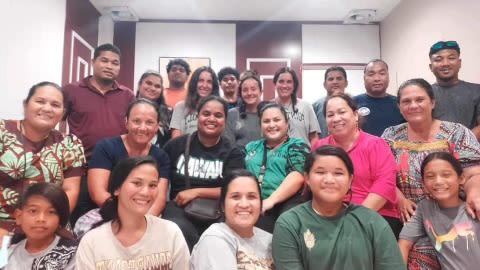
Bamle (family) I met and reunited with on Majuro, Marshall Islands, in July 2024. Photo courtesy of Sydney Brammer.
Bamle (family) I met and reunited with on Majuro, Marshall Islands, in July 2024. Photo courtesy of Sydney Brammer.
I've lived in San Diego for four years, and four months ago, I learned there were 300 Marshallese who lived 20 minutes from me. I didn't grow up with the knowledge of these traditions and customs. They took me in, treated me like family and taught me what it means to be Marshallese.
Knowing where I come from and what blood I carry has allowed me to understand my identity. This project wasn't just to shed light on an underrepresented community, but to learn who I am and where I'm from.
 Built with Shorthand